Web Design Pricing 2026: Cost Guide by Site Type
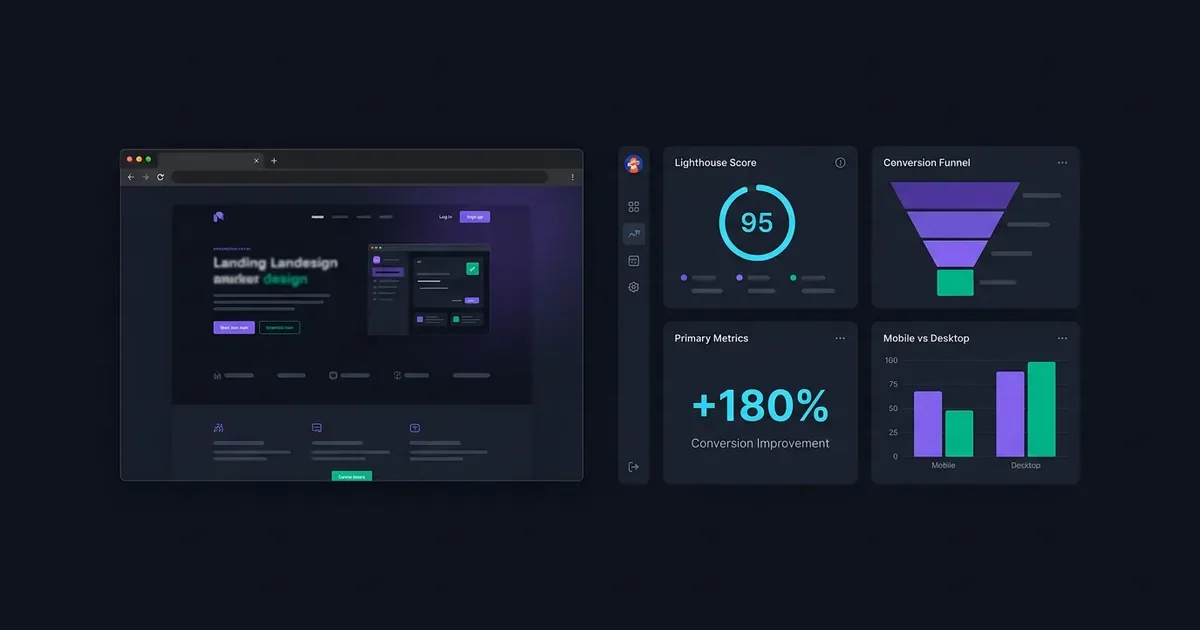
Web design prices in the 2026 Turkey market span an enormous range - from 3,000 TL to 200,000 TL. That gap exists because the word "website" masks fundamentally different products: one proposal saying "5,000 TL for a website" means filling a purchased template with your content, while another quoting "60,000 TL" delivers custom design, mobile optimization, performance engineering, and a content management system as a unified package. The confusion is compounded by the fact that both proposals can legitimately call their output a "website." In this guide, we break down real Turkish market prices by site type using comparison tables, explain what actually drives price differences, contrast templates against custom builds, expose the recurring costs most proposals hide, and make the case for why the true total cost of a cheap site is rarely what the initial invoice suggests - and why that distinction matters more than the headline number.
After more than ten years working with businesses across every budget tier, the most expensive mistake I see consistently is treating a website as a pure cost item and selecting the cheapest proposal on the table. Your website is where all your digital marketing traffic lands - every visitor arriving from paid search, organic ranking, and social media either converts into a customer here or disappears. The most critical line item in your digital marketing budget is the infrastructure that turns that traffic into revenue. That is why the correct lens for evaluating web design pricing is not cost but conversion return.
Web Design Prices by Site Type in 2026
In the Turkish market, web design prices shift most dramatically based on site type and scope. The table below shows typical 2026 market ranges:
| Site Type | Typical Price Range (TL) | Best Fit | Timeline |
|---|---|---|---|
| Template (business card) | 3,000-8,000 | Single-page intro, urgent need | 2-5 days |
| Landing page | 8,000-20,000 | Single campaign, paid ad destination | 1-2 weeks |
| Corporate multi-page site | 28,000-62,000 | SMB, brand, multi-page corporate | 3-6 weeks |
| E-commerce site | 35,000-150,000+ | Online sales, payment and shipping integration | 6-12 weeks |
| Custom software / web app | 80,000-500,000+ | Dashboard, reservations, custom workflow | 2-6 months |
These figures cover design and development only. Domain registration, hosting, maintenance, and content production are separate line items in most proposals - covered in detail in the "Hidden and Recurring Costs" section below.
What Drives Web Design Pricing
Two agencies quoting 25,000 TL and 60,000 TL for the same "corporate site" job are making different decisions on each of the following factors:
- Design originality: Pre-built theme or built-from-scratch custom design? This is where the largest price delta originates.
- Page count and scope: A 5-page site and a 30-page site involve meaningfully different effort.
- Content management system: Do you need a panel that lets your team update the site without a developer?
- Mobile and speed optimization: Engineering for Core Web Vitals (LCP, CLS) requires additional work on top of basic development.
- Integrations: Payment gateways, shipping APIs, CRM, email, WhatsApp, booking systems.
- SEO foundation: Is schema markup, sitemap, and technical SEO being built in from day one?
- Content production: Are copywriting and visuals included, or are they expected from your side?
When comparing proposals, look at how each of these seven items is defined - not just the total price. The difference between two quotes almost always comes from scope, not from the hourly rate.
Template vs Custom Design
This is the most frequently confused distinction in web design. A ready-made template (purchasing a theme and filling it with your content) sits in the 3,000-8,000 TL range and can be delivered in days. The trade-off is that thousands of other sites look identical, customization ceilings are low, and scaling later becomes difficult. Custom design starts at 28,000 TL because it includes a brand-specific interface, its own component system, and a scalable architecture built around your business.
| Criterion | Template | Custom Design |
|---|---|---|
| Price | 3,000-8,000 TL | 28,000 TL+ |
| Timeline | 2-5 days | 3-6 weeks |
| Uniqueness | Low (thousands of copies) | Brand-specific |
| Growth flexibility | Limited | High |
| SEO control | Within theme constraints | Full control |
| Right fit | Urgent, single-page, tight budget | Brand, conversion, long-term |
WordPress vs Modern Stack
The vast majority of websites in Turkey are still built on WordPress, and this choice carries consequences that show up not in the initial invoice but in long-term performance, security, and maintenance overhead. WordPress offers fast setup and a wide plugin ecosystem. However, stacking multiple plugins slows the site over time, every plugin introduces a new security attack surface, and regular update maintenance becomes an ongoing obligation. A modern architecture - for example, a Next.js site deployed on infrastructure like Vercel - serves pages as pre-generated static files, which loads dramatically faster, eliminates most plugin-based security exposure, and delivers meaningful advantages in Core Web Vitals scores that Google uses as a ranking signal. Two sites built to the same budget look similar on launch day but end up in very different places after twelve months when you measure speed, security incidents, and maintenance cost.
The practical summary: WordPress tends toward "lower initial setup and continuous maintenance," while a modern stack trends toward "slightly higher initial build and lower operational burden." The right answer depends on the total cost of ownership across the intended life of the site.
Which site type is right for your business?
Corporate, e-commerce, or a conversion-focused landing page? In a 30-minute call we map your goal, budget, and growth plan to identify the right scope before you start collecting proposals.
Book a callHidden and Recurring Costs
Because only the design-development line is visible in the headline price, the initial quote rarely reflects the true total cost of ownership. Recurring items to account for:
| Item | Typical Cost | Frequency |
|---|---|---|
| Domain (.com / .com.tr) | 200-600 TL | Annual |
| Hosting / server | 1,500-12,000 TL | Annual |
| SSL certificate | 0-2,000 TL | Annual (most are free now) |
| Maintenance and updates | 500-3,000 TL | Monthly |
| Content updates / new pages | 1,000-5,000 TL | As needed |
| Annual refresh / design update | 10,000-20,000 TL | Annual |
The maintenance line is notably higher for WordPress-based sites than for modern stacks, because plugin updates, security patches, and compatibility issues require regular hands-on intervention. Always ask "what will this cost twelve months from now?" before signing a proposal.
Agency vs Freelancer vs Platform
Who you hire to build your site directly affects both the price and the outcome:
| Criterion | Agency | Freelancer | Ready Platform (Wix/template) |
|---|---|---|---|
| Price range | 28,000-200,000+ TL | 8,000-60,000 TL | 0-1,500 TL/month |
| Uniqueness | High | Medium-high | Low |
| Process assurance | Contract and team | Person-dependent | Self-service |
| Technical support | Corporate | Flexible but risky | Forum / documentation |
| SEO and speed control | High | Variable | Limited |
| Right fit | Brand, e-commerce, long-term | SMB, clear scope | Temporary, very tight budget |
Agency makes sense when you need brand equity, e-commerce capability, or a multi-page corporate build. Freelancer makes sense when the scope is well-defined and the budget is mid-range. Ready platform makes sense only for a temporary, single-page, minimal-budget need - but if you have a growth plan, a platform will hit its ceiling before you need it to.
The True Cost of a Cheap Site
A 5,000 TL site looks 90% cheaper than a 50,000 TL site on paper, but that calculation is incomplete. The hidden cost of a cheap site typically emerges from three places: a slow-loading site loses half its visitors before the page even finishes rendering, a mobile-unfriendly design drops in Google rankings, and an interface not designed for conversion fails to turn incoming traffic into customers. The net result is that the money you spend on advertising evaporates because it lands on an underperforming site. A website's value is not measured by what it costs to build - it is measured by the share of visitors it converts into customers.
The transparent framing is this: evaluate the price alongside the conversions the site will generate. If your monthly ad spend is 20,000 TL and your site cuts conversion rate in half, your "cheap site" is costing you 10,000 TL every month. Just as not having a website carries real costs for a business, a poor site generates losses that never appear on an invoice but are entirely real.
Modern stack: speed and conversion built in
Next.js and Vercel architecture means fast-loading sites designed for conversion from day one. Let's talk price as return, not cost - a 30-minute call to scope your project properly.
Book a callRed Flags in a Web Design Proposal
Watch for these signals when evaluating proposals:
1. No Scope Table
If the proposal contains only a total price and does not specify which pages, integrations, and optimizations are included, you will encounter "that's an extra" surprises later.
2. "Everything Included" With No Detail
A vague "everything included" phrase almost always means a pre-built template plus limited customization. A proposal that does not itemize what is included is not transparent.
3. No Speed or Mobile Guarantee
In 2026, a site loading fast on mobile is non-negotiable. If the proposal says nothing about Core Web Vitals or mobile performance, that line item has been skipped.
4. Site Ownership Is Ambiguous
When the site is complete, who owns the domain, hosting, and source code? Some providers lock the site to their own platform - if you want to leave, you lose everything. Make sure the contract explicitly states that ownership stays with you.
5. Post-Launch Support Is Undefined
How will updates, bug fixes, and support work after delivery? If this is not defined, the first issue after handoff will turn into a fee negotiation.
Web Design Proposal Checklist
Before making a decision, get clear answers to these questions:
- Does the proposal list each page and define its scope?
- Is the design custom-built or a pre-made template?
- What infrastructure is being used (WordPress, modern stack, ready platform)?
- Are mobile optimization and speed performance included?
- Is the SEO foundation (schema, sitemap, technical SEO) being built from the start?
- Is content (copy and visuals) included, or expected from your side?
- Who owns the domain, hosting, and source code?
- How is post-delivery maintenance and support defined?
- Which integrations are included (payment, shipping, CRM, WhatsApp)?
- What is the total first-year cost (design, hosting, and maintenance)?
If you cannot get clear answers to at least 8 of these 10 questions, the proposal has significant gaps.
Let's plan your site around what it returns
Site type, scope, infrastructure choice, and total year-one cost - a 30-minute strategy call to nail down the right decision for your project.
Book a callFrequently Asked Questions
How much does a basic website cost in 2026?
A single-page business card site built on a ready-made template runs 3,000-8,000 TL and can be delivered in 2-5 days. A multi-page corporate site with custom design starts at 28,000 TL. Because "basic" means something different to everyone, clarify page count, integrations, and whether the design is custom or template-based before requesting a quote - otherwise the prices you receive are not comparable.
What determines the price of a corporate website?
Corporate site pricing (typically 28,000-62,000 TL) is driven primarily by design originality, page count, whether a content management system is included, and the depth of speed and SEO optimization. Under the same "corporate site" label, you can find a 15,000 TL job built on a purchased theme and a 60,000 TL job built from scratch with a custom interface - which is exactly why scope, not price, is what should be compared.
How much does an e-commerce site cost?
In 2026, an e-commerce site starts at 35,000 TL and exceeds 150,000 TL for large-scale projects. The main pricing drivers are product catalog size, payment gateway and shipping integrations, inventory management, and custom campaign or cart logic. Ready-made e-commerce platforms (monthly subscription model) offer lower upfront cost but come with meaningful limits on customization and ownership.
Do I have to pay for website maintenance?
Technically, no - but an unmaintained site gradually loses value through security vulnerabilities, broken functionality, and outdated content. Maintenance fees run 500-3,000 TL per month. WordPress sites require more ongoing attention because of plugin updates, whereas modern static architectures carry lower operational load and therefore lower maintenance cost.
Is going cheap on a website ever a smart move?
For a temporary, single-page need with no growth plan attached, a low-cost solution can be the right call. But if your site is where ad or search traffic lands, slow load times and low conversion rates on a cheap site will cost you more than you save. In that scenario, the right question is not "which site is cheapest" but "which site converts the highest share of visitors into customers."
Your Next Step
Web design prices vary by up to tenfold depending on site type and scope, which makes price comparison in isolation deeply misleading. The right decision starts with clarifying what kind of site you actually need (landing page, corporate, e-commerce), which infrastructure will lower your total cost of ownership over time, and what the conversion goal of the site is. Decisions made without accounting for total first-year cost (design, hosting, and maintenance) tend to grow into unexpected expenses later.
If you want to talk through the right scope and infrastructure for your site, you can browse our web design services or book a strategy session. In a 30-minute call, we will analyze your needs and jointly determine which site type and budget level is the right starting point for you.

Abdullah Çalış
Dijital Pazarlama Stratejisti & Otomasyon Mimarı
Framework odaklı, veri destekli dijital pazarlama stratejileri ve AI otomasyon çözümleri ile markaların sürdürülebilir büyümesini sağlıyorum.
Dijital Pazarlama Stratejinizi Güçlendirin
Framework odaklı yaklaşımımız ile markanızı büyütmek için hemen iletişime geçin.
Strateji Görüşmesi Alınİlgili Yazılar
E-commerce Consulting: What It Covers, How Fees Are Set
What e-commerce consulting covers, its four types, how fees are set and how a consultant compares with an agency, a platform partner or an in-house hire.

Digital Marketing Consultant: What They Do, How to Choose
What a digital marketing consultant does, how the role differs from a channel specialist, an agency or an in-house hire, and how to choose one.

Social Media Management Pricing: 2026 Turkey Guide
How much are social media management prices in 2026? A complete guide on package comparisons, agency vs freelancer, hidden costs, and ROI analysis.