Google Ads Management Guide: 2026 Professional Strategy
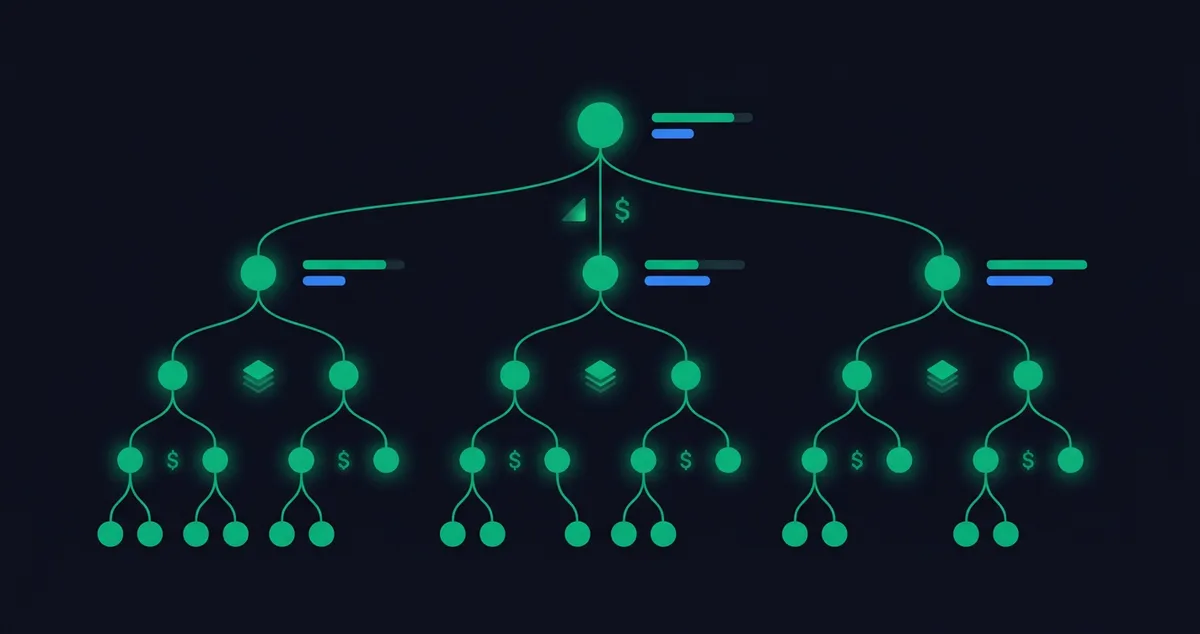
Google Ads management in 2026 has evolved far beyond classic keyword bidding into a six-layer discipline. Enhanced Conversions, GA4 and GTM server-side tagging, the Performance Max algorithm, Quality Score improvement and industry benchmark comparison have all become standard for any serious account. The platform has shifted from manual keyword bidding to an AI-driven, automated structure, so the work now sits less in setting individual bids and more in feeding the algorithm clean conversion data and the right campaign architecture. In this guide I explain why a properly built and properly managed Google Ads account runs at a 30%+ lower CPA than a poorly configured one, and what specifically needs to be done differently across account setup, campaign mix, creative iteration, budget management, reporting discipline and the monthly optimisation cycle. It is a practical playbook distilled from 50+ projects and an average 4.6x ROAS framework, written so that you can judge your own account or your agency against a concrete standard rather than vague promises.
What is Google Ads Management and What Does It Cover in 2026?
Google Ads management is the end-to-end operation of Search, Performance Max (PMax), Display Network and YouTube campaigns on the Google Ads platform. Modern management consists of six core layers that must run in parallel: account setup with Enhanced Conversions and CAPI, campaign architecture built as a Search, PMax, Display and YouTube hybrid structure, creative iteration covering ad copy, assets and Smart Bidding, budget management, reporting discipline and a monthly optimisation cycle. Each of these layers carries its own discipline, and when one of them is missing the chain breaks and ROAS drops, which is why amateur management that only touches two or three of them tends to stall while a complete operation keeps compounding results. Understanding management this way, as a connected system rather than a single keyword-bidding task, is the foundation everything else in this guide builds on.
As of 2026, Google Ads has shifted from manual keyword bidding to an AI-driven, automated structure. The Performance Max algorithm distributes spend across every Google placement (Search, Display, YouTube, Gmail, Discover, Maps) inside a single campaign. Manual control still matters in Search, but for scale the Search and PMax hybrid setup has become the default. This hybrid balances PMax automation with the precision of Search.
After iOS 14.5 ATT (App Tracking Transparency), web pixel signals lost more than 50% of their fidelity. That gap is now closed by the trio of Enhanced Conversions (server-side pixel), Consent Mode v2 and GA4 server-side tagging. A correct deployment lifts recorded conversions by 15-25%, which translates directly into higher measured ROAS. Without CAPI, advertisers are effectively wasting a portion of every campaign's budget by failing to attribute results.
The 6 Layers of Google Ads Management
Professional Google Ads management requires running six layers in parallel. Each layer has its own discipline; when one is missing, the chain breaks and ROAS drops.
Layer 1 - Account setup: Enhanced Conversions, Consent Mode v2, GA4 server-side tagging, conversion goals and value mapping. This is the nervous system of the account. If it is wrong, everything built on top of it runs blind.
Layer 2 - Campaign architecture: The right mix of Search, Performance Max, Display and YouTube for your industry. E-commerce leans on PMax Shopping, services need Search and Call campaigns, B2B works best with long-tail Search and audience signals. Picking the wrong campaign type can multiply spend without moving results.
Layer 3 - Creative iteration: Ad copy, assets, responsive search ads, PMax asset groups and audience signals. Plan for 3-5 fresh assets per month, structured A/B tests and ruthless performance-based pruning.
Layer 4 - Budget management: Daily and monthly budget pacing, conversion value optimisation and the right Smart Bidding strategy. Choosing correctly between Maximize Conversions, Target CPA and Target ROAS often determines the outcome.
Layer 5 - Reporting discipline: Weekly ROAS tracking and a comprehensive monthly report. CPC, CTR, Quality Score, ROAS, LTV and industry benchmark comparison should be the standard scope.
Layer 6 - Optimisation cycle: Negative keyword lists, Quality Score improvement, asset performance pruning and budget reallocation. Small weekly iterations with a larger monthly strategy review.
A specialist or team running all six layers consistently delivers 4x+ ROAS. Amateur management that focuses on only 2-3 layers typically stalls at 1.5-2.5x ROAS, which means nearly half of the digital marketing budget is wasted.
Where is your Google Ads account leaking budget?
A 30-minute strategy call to audit your structure, bidding and Quality Score - then prioritise the 2-3 changes that will move ROAS within a month.
Book a call2026 Google Ads Campaign Types and Industry Fit
Google Ads offers seven main campaign types in 2026. Each is optimised for a different industry and marketing objective. Picking the right campaign type is the single biggest lever in management quality.
Search: The foundation for high-intent queries. Mandatory for services, B2B and local businesses. Gives you manual keyword and ad copy control.
Performance Max: Automated distribution across every Google placement. PMax Shopping is essential for e-commerce; for other sectors it acts as a supporting layer to Search. Asset groups and audience signals are what teach the algorithm.
Display Network: Banner and responsive display ads. The primary channel for retargeting. It rarely drives last-click conversions on its own but is critical mid-funnel.
YouTube Ads: Video ads (TrueView, Bumper, In-feed). A scalable channel for awareness and retargeting. CPM is low, but expecting direct conversions from cold video is a mistake.
Discovery / Demand Gen: Google's scroll-friendly feed placements in Gmail, Discover and the YouTube home feed. Ideal for lifestyle and visually driven categories.
App Campaign: Mobile app installs. Only relevant for brands with an app.
Local Services Ads (LSA): For local service businesses (lawyers, plumbers, physiotherapists). Google surfaces these with a "verified business" badge.
Industry mapping examples: fashion e-commerce -> PMax Shopping and Search; healthcare clinic -> Search, Call and LSA; B2B SaaS -> long-tail Search and YouTube retargeting; local restaurant -> LSA, Search and Local campaign; education/courses -> Search, YouTube TrueView and Display retargeting.
Enhanced Conversions and GA4 and GTM Setup
In a world of iOS ATT and third-party cookie blocking, Enhanced Conversions is the new standard for modern Google Ads management. It pushes conversion signals from the server directly to Google, compensating for the data loss in web pixels.
The setup has three stages. First, a GA4 and GTM server-side container - a server-hosted version of Tag Manager. Second, Consent Mode v2 integration - Google's official standard for modulating cookies based on user consent. Third, sending hashed user data (email, phone, name, address) on conversion events; Google matches these signals against its own dataset to recover otherwise lost conversions.
A correctly deployed Enhanced Conversions, AEM (Aggregated Event Measurement) and Consent Mode v2 stack lifts recorded conversions by 15-25%. That uplift flows directly into ROAS - with the same creative and the same budget, just the right setup can produce a 30%+ lower CPA. It is a one-off implementation cost (typically 15,000-30,000 TL), separate from monthly management; infrastructure only.
GA4 server-side tagging needs either Google Cloud Run or a self-hosted Node.js server. Hosting runs around 50-150 TL per month, but data ownership and analytics accuracy improve dramatically. At SMB scale, server-side tagging is not strictly mandatory but is recommended, because it more than pays back the implementation cost.
Quality Score Improvement Strategy
Quality Score (QS) is Google's 1-10 rating of how well your keyword, ad and landing page align. A higher QS means a lower CPC and a stronger position. Improving QS is one of the most fundamental disciplines in Google Ads management.
QS has three components: Expected CTR, Ad Relevance and Landing Page Experience. All three can be improved, and each needs a different approach.
For Expected CTR: ad copy should match the keyword closely, the keyword should appear early in headlines, and you should use descriptive extensions (Sitelinks, Callouts, Structured Snippets). For Ad Relevance: each ad group should focus on a single theme (max 10-20 keywords), with at least 3 ad variants per group, and dynamic keyword insertion can be tested. For Landing Page Experience: page load under 3 seconds, mobile-first responsive design, alignment between ad copy and landing page H1, and Core Web Vitals in the "good" range.
QS 7+ is healthy, 5-6 is average, below 5 is a problem. Either improve low-QS keywords or pause them - paying inflated CPC for weak Quality Score is wasted budget. A monthly QS audit is standard practice; every month you should review low-QS keywords and act on them.
Smart Bidding and Automation Strategies
In 2026, manual CPC bidding only makes sense for brand-new accounts or very narrow campaigns. Once you have enough data (typically 30-50 conversions), Smart Bidding strategies should take over.
Maximize Conversions: Recommended for the first 30 days on a new account. The algorithm spreads the available budget to capture as many conversions as possible, with a budget cap and conversion goal.
Target CPA: Sets a maximum cost-per-conversion target. The algorithm tries to stay below it. Needs stable conversion data (30+ conversions per month recommended).
Target ROAS: Ideal for conversion-value-driven campaigns. Best fit for e-commerce and B2B SaaS where LTV matters. You set a target ROAS (e.g. 4.0x) and the algorithm optimises to it.
Maximize Conversion Value: Aims for maximum conversion value without a ROAS constraint. Suited to brands with large budgets.
Smart Bidding choice depends on industry and objective. Target ROAS for e-commerce, Target CPA for services, Maximize Conversions for new accounts. Changing strategy triggers a 14-30 day learning period - frequent switching destabilises the algorithm.
2026 Google Ads Agency Management Pricing
Google Ads management fees vary with ad spend, number of campaigns and service scope. These are the typical ranges in the 2026 Turkey market.
- One-off account audit: 8,000-15,000 TL. Existing account review and 30-day roadmap.
- Small business monthly management (monthly spend 30K-100K TL): 13,000-20,000 TL. 1-2 campaigns and basic reporting.
- Mid-market SMB (monthly spend 100K-500K TL): 20,000-40,000 TL. Search and PMax hybrid, Enhanced Conversions and monthly optimisation.
- E-commerce or high spend (monthly spend 500K+ TL): 40,000-100,000 TL. All channels, premium creative, industry benchmarks and LTV analysis.
- Spend percentage model: 15-25% of ad spend, with the rate compressing on larger budgets.
Be cautious about offers below 5,000 TL/month. At that price point, Enhanced Conversions will not be implemented and you will get little more than a basic Search campaign. ROAS stays low - "cheap management" ends up being expensive.
A properly built Google Ads account means 30%+ lower CPA
50+ projects, 4.6x average ROAS, Enhanced Conversions, GA4 and GTM as standard. In a 30-minute call we look at your account, the improvement potential and where to start - no commitments, no contract.
Schedule strategy callHow to Choose a Google Ads Agency
When choosing a Google Ads agency, these seven criteria matter most. They are distilled from working with more than 50 SMBs.
- Do they implement Enhanced Conversions, GA4 and GTM? Without this trio, you leave half of your ROAS on the table.
- Do they have parallel experience across Search, PMax, Display and YouTube? A single-channel agency hits its growth ceiling quickly.
- Do they have real ROAS case studies in your industry? At minimum, 2-3 examples in a comparable vertical.
- Does monthly reporting include CPC, CTR, QS, ROAS and LTV? A "spend and conversions" report is not enough.
- Do they handle creative production? Management-only agencies cannot solve creative fatigue.
- Is the contract length reasonable (3-6 month trial)? A 12+ month lock-in is a red flag.
- Single point of accountability? Large agencies with constantly rotating account managers waste efficiency at SMB scale.
An agency (or a solo specialist with a small team, or a small boutique) that hits all seven criteria is the optimal choice for an SMB. Agencies with 50+ staff are built for 100+ employee companies; freelancers max out around 5-10 clients.
Frequently Asked Questions
Should I run Google Ads myself or hire an agency?
If monthly spend is below 30,000 TL, self-management is reasonable (assuming you accept the learning curve). At 30,000+ TL, agency management pays for itself through the ROAS difference - a 15-25% management fee is offset by a 30-50% ROAS improvement. At 100,000+ TL spend, agency management is almost mandatory; mismanagement at that scale costs 50,000-100,000 TL per month.
How much budget does Performance Max need?
For PMax to learn properly, your daily budget should be roughly 10x your Target CPA. If Target CPA is 100 TL, daily budget should start at 1,000 TL. A monthly spend of 30,000 TL is the practical floor. Below that, the learning period drags out and ROAS stays volatile.
When will I see ROAS from Google Ads?
Search campaigns produce the fastest signal - first conversion data within 7-14 days. Performance Max needs a 14-30 day learning period before ROAS stabilises. Quality Score improvements show up in 30-60 days. For new accounts, the first 90 days are a data collection and warm-up phase; avoid radical strategy changes during that window.
Is Enhanced Conversions mandatory?
Technically no, but in 2026 it is critical for protecting ROAS. After iOS ATT and third-party cookie blocking, classic conversion pixel signals lost more than 50% of fidelity. Enhanced Conversions recovers 15-25% of conversions, and that improvement flows directly into ROAS. Modern Google Ads management is considered incomplete without it.
How do I improve my Quality Score?
Three main actions: 1) Align ad copy tightly with the keyword (keyword should appear early in headlines), 2) Keep ad groups narrow (max 10-20 keywords, single theme), 3) Get landing page load time under 3 seconds and Core Web Vitals into the "good" range. Review low-QS keywords monthly - if they cannot be improved, pause them.
When should Smart Bidding be activated?
Once you have enough conversion data (typically 30-50 conversions, ideally 30+ per month). New accounts spend the first 30 days on Maximize Conversions, then move to Target CPA or Target ROAS. Changing Smart Bidding strategy triggers a 14-30 day learning period; frequent switching breaks the algorithm.
How should the negative keyword list be managed?
Reviewing the Search Terms report weekly and adding irrelevant queries as negatives is standard practice. For an SMB account, expect 20-50 new negatives per month. The negative list can be shared across the account (Shared Negative Keyword List) and applied to every campaign. A clean negative list typically reduces CPC by 15-25%.
Is it worth the investment, and what is the ROI?
Well-managed Google Ads delivers an average of 4x+ ROAS - every 1 TL of ad spend generates 4 TL in sales. In service businesses with higher margins, this can climb to 6-10x. If management is priced at 15-25% of spend, a 4x ROAS still leaves a 3x net return. Mismanaged accounts stall at 1.5-2x ROAS, where Google Ads becomes a cost rather than a profit centre.
Google Ads management in 2026 is a far broader discipline than classic keyword bidding. A properly built Enhanced Conversions, GA4 and GTM stack, a Search and PMax hybrid structure, a monthly iteration cadence and Quality Score-focused landing page work consistently deliver 4x+ ROAS. A specialist or team running all six layers in parallel turns Google Ads into the highest-converting channel in your digital marketing budget.
30-minute strategy call - a concrete roadmap
You have read the guide - now let's map out the right approach for your account. In a 30-minute call we look at your current account, your goal and how long each lever will take to move the needle. No commitments, no contract. Just a clear starting point built around your numbers.
Book a callGoogle Ads agency service - you can review the detailed package contents, pricing tiers and client results on the service page.
Related guides: Google Ads Specialist: What They Do, How to Choose · Google Ads vs Meta Ads Comparison · How to Increase Facebook Ads ROAS · Digital Marketing Budget 2026 · Landing Page Conversion Rate

Abdullah Çalış
Dijital Pazarlama Stratejisti & Otomasyon Mimarı
Framework odaklı, veri destekli dijital pazarlama stratejileri ve AI otomasyon çözümleri ile markaların sürdürülebilir büyümesini sağlıyorum.
Dijital Pazarlama Stratejinizi Güçlendirin
Framework odaklı yaklaşımımız ile markanızı büyütmek için hemen iletişime geçin.
Strateji Görüşmesi Alınİlgili Yazılar

Google Ads Pricing 2026: Ad Budget and Management Fee
How is Google Ads pricing set in 2026? The difference between ad budget and management fee, fee models, and the traps hidden beneath a low price.

Google Ads Specialist: What They Do, How to Choose 2026
What does a Google Ads specialist do, how do they differ from an agency, and how do you choose one? A 2026 decision framework, criteria, and red flags.
YouTube Ads Guide: Complete 2026 Playbook
YouTube ad formats (TrueView, Bumper, In-feed, Demand Gen), campaign setup, creative rules, pricing, and ROAS guide for 2026.