TikTok Ads Guide: 2026 Strategy Playbook
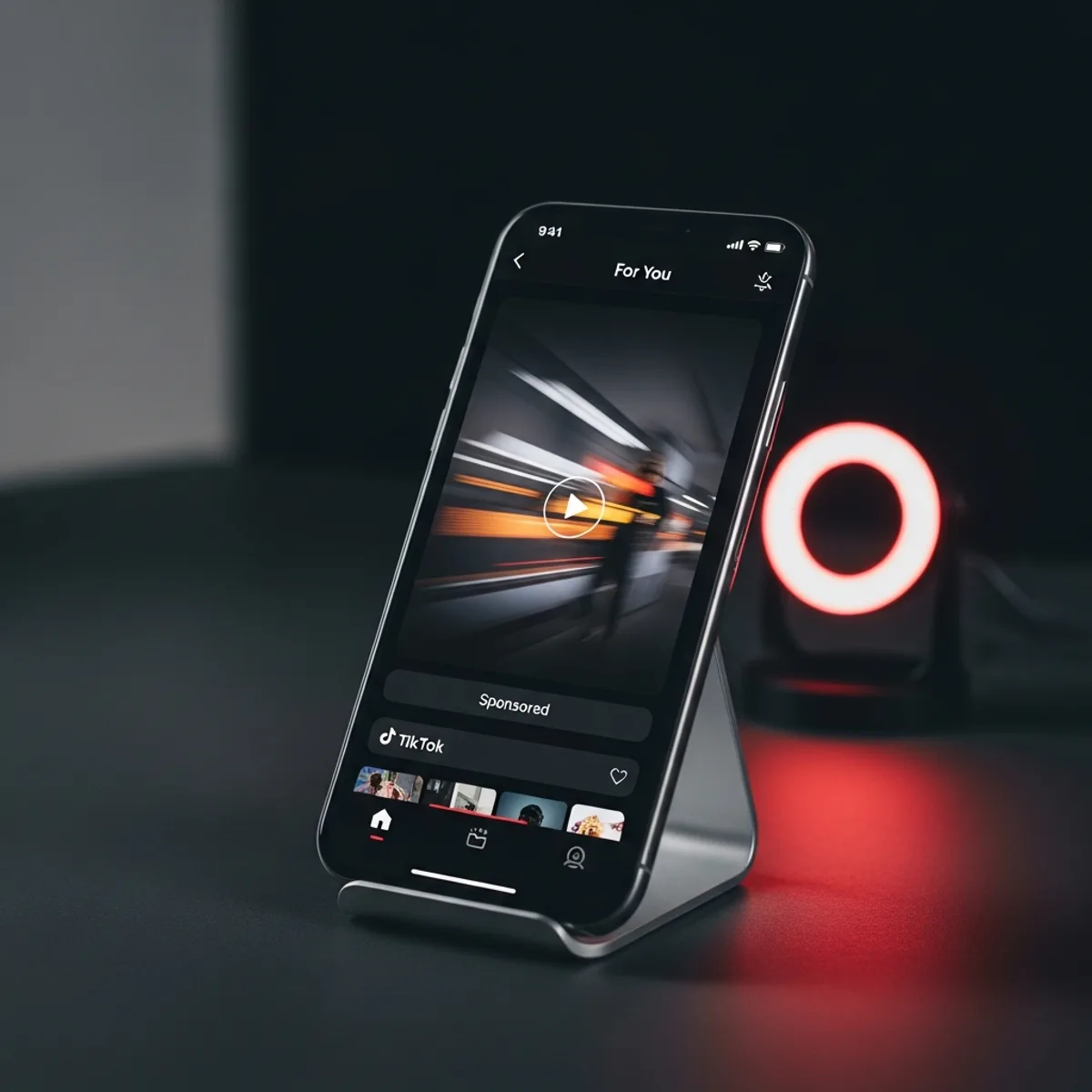
Running TikTok ads has become a serious discovery channel for SMBs, e-commerce stores and B2C brands going into 2026. The platform offers four core formats - Spark Ads, In-Feed Ads, TopView and Branded Hashtag Challenge - and the "FYP" (For You Page) algorithm still lets small budgets reach viral distribution when the creative is right. Unlike platforms where follower count gates your reach, TikTok rewards content quality and early engagement velocity, which is precisely what keeps the door open for smaller brands. In this guide I share how I think about the TikTok Ads platform, the campaign types I actually use with clients, the creative rules that keep ads alive in the feed, current pricing benchmarks in TL, and which industries are a real fit for the channel versus a polite waste of money. The goal is a clear, honest map you can act on before you spend a single lira on the platform.
What is TikTok Ads and Where Does It Reach?
TikTok Ads is ByteDance's advertising system for the TikTok platform, managed through TikTok Ads Manager at ads.tiktok.com. Placements are not limited to the TikTok app itself. The same campaign can be served across the Pangle network, which is TikTok's audience network of partner news and entertainment apps; you choose whether to opt into that network during campaign setup, and for most performance campaigns I keep it off to protect quality.
In Turkey, TikTok's active user base sits above 30M heading into 2026, still skewed heavily toward the 18-34 age bracket (the US base is gradually aging, but the Turkish base is younger). It is a mobile-first platform; more than 95% of usage happens on mobile. The native format is 9:16 vertical video, anywhere from 7 to 60 seconds, with the 15-30 second window acting as the practical sweet spot for both organic and paid.
In 2026 TikTok Ads is in real competition with Meta Reels. TikTok's CPM in Turkey typically lands 20-30% lower than Meta's because the audience is younger, fully mobile and more impulsive. The trade-off is that audience quality varies sharply by category: e-commerce, entertainment, beauty and fashion convert beautifully, while B2B and high-margin technical products convert poorly. When the category and the creative line up, I have seen ROAS land in the 4-7x range. When they don't, no amount of bidding fixes it.
TikTok Ad Formats - The Four Core Types
TikTok Ads has four core formats. Each one is designed for a different objective and a different budget level, and mixing them up is the most common mistake I see in audits.
1. In-Feed Ads: TikTok's standard campaign type. The ad shows up inside the user's feed in the same slot as organic content. 9:16 vertical video, 9-60 seconds, native experience. Billed on CPC or CPM. This is the baseline format for almost every category.
2. Spark Ads: A paid boost on an existing organic TikTok post. The video is served from a brand account or a creator account (with their authorization code) and amplified as an ad. This is the format I push hardest on because it delivers the highest ROAS in my own client data; it looks organic in feed because it literally is an organic post, and likes, comments and shares accrue to the post itself.
3. TopView: A full-screen video that loads when the user first opens the TikTok app. 5-60 seconds, premium placement. CPM is very high, so it makes sense for product launches, premium positioning or genuinely viral cultural moments. For an SMB it is rarely the right starting point.
4. Branded Hashtag Challenge: A user-generated content campaign. The brand launches a hashtag plus a challenge mechanic, and users create their own videos around it. The strongest format for awareness and UGC, but the production and seeding budget realistically starts above 200,000 TL.
Brand Effects, Branded Mission and Spark Ads with influencers: These are advanced layers. At SMB scale, concentrating budget on In-Feed plus Spark Ads is more than enough to learn the platform and find your unit economics.
Format-to-industry fit I use as a starting point:
- Fashion and cosmetics e-commerce: In-Feed and Spark Ads
- Food, beverage and restaurants: Spark Ads (UGC-led)
- Services (clinic, beauty, wellness): Spark Ads and In-Feed
- B2C digital products (courses, apps): In-Feed and TopView (for launch)
- Entertainment and lifestyle: Spark Ads and Branded Hashtag
- B2B: Usually a wrong fit; LinkedIn is the better channel
Setting Up TikTok Ads Manager Step by Step
Here is the order I follow when onboarding a brand to TikTok Ads:
Step 1: Create a TikTok Business Account (5 minutes)
Go to ads.tiktok.com, click "Sign Up", enter business information, verify the confirmation email. Account ready.
Step 2: Add a Payment Method (10 minutes)
Under "Finance > Payment Method", add a credit card or bank account. Banking verification can take up to 24 hours.
Step 3: Install the TikTok Pixel (30-60 minutes)
Under "Assets > Events > Web Events > Manage", create the Pixel. Add the Pixel code to the site, either manually or through Google Tag Manager. Configure the standard events (PageView, ViewContent, AddToCart, InitiateCheckout, CompletePayment, SubmitForm). Verify with the TikTok Pixel Helper Chrome extension.
Step 4: Wire Up the Events API (server-side, the CAPI equivalent)
After iOS 14.5, TikTok lost 30%+ of browser-side pixel signal just like Meta. The Events API sends events server-side so attribution survives. You can wire it through a server-side GTM container, a tag management gateway, or a custom backend. In 2026, treat this as standard, not optional.
Step 5: Launch the First Campaign
Click "Campaigns > Create". The structure has three layers: Campaign > Ad Group > Ad. Pick an objective (Reach, Traffic, Engagement, Video Views, Lead Generation, Web Conversions, Catalog Sales, App Promotion, Shop Purchases).
Step 6: Set Targeting and Budget
Demographics, interests, behaviors, custom audiences, lookalike audiences. Smart Audience (algorithmic targeting) is the default in 2026 and is genuinely worth trusting after the first learning phase. Choose between daily and lifetime budgets.
Step 7: Upload Creative and Publish
Upload the 9:16 video, write the headline and caption, select the CTA button (Shop Now, Sign Up, Learn More and so on). Once it clears review, it goes live.
Does your brand belong on TikTok?
TikTok works brilliantly for some categories and never converts for others. Let's spend 30 minutes mapping your audience, creative capability and offer fit before you spend a single TL.
Book a callTikTok Creative Rules - Working With the Algorithm
The TikTok algorithm does not behave like the other platforms. Follower count is almost irrelevant; what matters is content quality and engagement velocity in the first few hours. Paid creative has to respect the same rules, or the algorithm simply throttles it.
Hook (the first 0-3 seconds - critical):
- A visual surprise or unexpected setup
- A "POV:" framing
- A bold question or claim
- Sync to a trending audio
- A cliffhanger like "I'll show you how I pulled this off, but first..."
Body (3-15 seconds):
- Fast cuts (scene changes every 1-2 seconds)
- Native TikTok font and text overlays
- Hard-coded captions (more than 85% of viewers watch with sound off at least part of the time)
- Trending audio with on-beat editing
- An authentic feel; over-produced ads are penalized by the algorithm
CTA (15-30 seconds):
- A clear action - "Tap the link", "Visit the store"
- Urgency - limited window, discount, low stock
- Brand name and logo, but kept subtle (think watermark, not billboard)
- TikTok-native CTAs like "Comment 'YES' for the link in bio"
Don't Make Ads, Make TikToks (TikTok's official slogan): This is not a marketing line, it is a direct instruction. The classic TV-style polished ad does not work in this feed. Without UGC energy, authenticity, a creator-style point of view, native sound and trend awareness, paid creative gets skipped. Lower production value plus mobile-first authenticity beats studio polish on TikTok almost every time.
Technical requirements:
- Format: MP4, MOV, MPEG, AVI (MP4 recommended)
- Resolution: 720x1280 minimum, 1080x1920 recommended
- File size: 500 MB maximum
- Duration: 5-60 seconds (sweet spot 15-30 seconds)
- Audio: Stereo, 44.1 kHz
- Caption: 100 characters maximum
TikTok Ad Pricing in 2026
TikTok ad pricing in Turkey behaves differently from the other major platforms. The younger, mobile-first, more impulsive audience pulls CPM down, but CTR and conversion rates swing widely by category.
CPM (cost per 1,000 impressions):
- Broad market: 40-100 TL per 1,000 impressions
- Premium targeting: 100-180 TL
- TopView (premium placement): 500-1,500 TL
CPC (cost per click):
- General: 1.50-4.00 TL per click
- High-intent (e-commerce, cosmetics): 3.00-8.00 TL
CPV (cost per view, 6 seconds and above):
- General: 0.15-0.40 TL per view
- Premium: 0.40-0.80 TL
Budget guidance I give brands:
- Test phase (first 30 days): 200-500 TL per day, roughly 6,000-15,000 TL per month
- Scale phase: 500-2,000 TL per day, roughly 15,000-60,000 TL per month
- Premium TopView launch: 100,000-500,000 TL per campaign
- Management fee: 15-25% of ad spend, depending on the agency
Sector CPL ranges (cost per lead):
- E-commerce cosmetics: 25-80 TL
- E-commerce fashion: 30-100 TL
- Service sector beauty: 50-150 TL
- Online education and courses: 80-200 TL
- B2B SaaS: 200-500 TL (and even here, TikTok is rarely the right channel)
ROI read: TikTok's structural advantage is the low CPM. For discovery and awareness it is 20-30% cheaper than Meta Reels. For direct response, however, Meta and Google Ads usually outperform it. The multi-channel funnel I default to is TikTok for awareness, Meta for retargeting, Google for high-intent capture. That stack gives the best blended ROAS in almost every brand I have audited.
Is TikTok actually the right channel for your category?
Not every industry belongs on TikTok. In a 30-minute strategy session we look at your category fit, your audience, your creative capacity and what realistic ROAS looks like before you commit budget.
Schedule strategy callTikTok vs Meta Reels - Which Fits Your Industry?
TikTok and Meta Reels look identical on the surface (vertical video) but the audience, the algorithm and the user intent are quite different.
| Criterion | TikTok | Meta Reels |
|---|---|---|
| Monthly users (TR) | 30M+ | 50M+ (Instagram) |
| Age demographic | Heavily 18-34 | 18-45 |
| User intent | Entertainment and discovery | Engagement and product discovery |
| Algorithm | Content-quality-first | Engagement-first |
| CPM | 40-100 TL | 60-150 TL |
| CTR | 1-3% | 0.8-2% |
| Best-fit categories | B2C e-commerce, entertainment, fashion | Broad |
| Creative rule | Authentic, native, UGC | Polished, brand-led OK |
| Format | 9:16 video only | 9:16 video, carousel, and image |
| Conversion tracking | Pixel + Events API | Pixel + CAPI |
| Native commerce | TikTok Shop (limited rollout) | Instagram Shop |
| B2B fit | Low | Medium |
How I pick the lead channel:
- 18-34 B2C audience: start on TikTok, scale into Meta
- Broad demographic B2C: start on Meta Reels, expand into TikTok
- Premium and luxury: Instagram and LinkedIn (TikTok is the wrong tone)
- B2B SaaS: LinkedIn, Google Ads, and Meta (TikTok rarely earns its slot)
- Service categories like beauty or healthcare: run both in parallel
Brands running a real multi-channel motion use TikTok for discovery and UGC awareness, Meta for retargeting and conversion, and Google for high-intent capture. That triangle is what actually maximizes blended ROI; treating any single platform as the whole strategy is what leaves money on the table.
Frequently Asked Questions
Do I need a large follower count to run TikTok Ads?
No. You can run ads through TikTok Ads Manager regardless of follower count. The only nuance is Spark Ads: to boost a specific organic post, you need either ownership of that account or a creator authorization code from the account that owns it.
How much should I budget to start on TikTok?
I recommend at least 6,000-10,000 TL per month so the algorithm gets enough data during the learning phase. Below that level, the algorithm cannot find a stable audience and the results scatter.
TikTok vs Meta Reels - which one is better?
It depends on your category and audience. For a younger 18-34 B2C audience, TikTok is cheaper. For a broader demographic, Meta gives wider reach. My default recommendation is to test both in parallel for 30 days, see which platform delivers a better ROAS for your specific offer, and then reallocate the budget.
What exactly are Spark Ads?
Spark Ads boost an existing organic TikTok post with paid budget. The video can be from your own brand account or from a creator's account (with their authorization). It consistently delivers the highest ROAS in my own client data because it looks organic in feed; it literally is an organic post.
Can I run campaigns without the TikTok Pixel?
For pure reach and awareness, no Pixel is required. For conversion and sales optimization, the Pixel plus the Events API is non-negotiable. After iOS 14.5, brands skipping the Events API lose more than 30% of conversion signal globally.
How long does ad review take?
Standard review runs 4-24 hours. Weekends and holidays stretch it. If a policy issue trips the review, you get a "Not Approved" status with a reason; fix it and resubmit.
Is TikTok a good fit for B2B?
Usually not. TikTok is optimized for B2C and impulse purchase. B2B decisions take longer and need LinkedIn-style professional context. The exception is B2B SaaS or developer tooling, where a creator-led awareness layer on TikTok can occasionally work as a top-of-funnel motion.
What is TikTok Shop?
TikTok's native commerce layer. It is available in select countries with a phased rollout and is not yet active for Turkey. Once it lands, it will function as TikTok's equivalent of Instagram Shopping, with in-video product tagging and one-tap checkout.
Get your TikTok ads strategy right from day one
You've read the guide - now let's translate it into a plan for your brand. In a 30-minute strategy session we look at whether TikTok fits you, which format to start with, and what realistic results look like. No commitment, no contract.
Book a callTikTok has earned its place as a serious discovery channel for B2C brands in 2026. The combination of low CPM, high engagement and real viral potential is genuinely attractive, but it is not the right channel for every category. E-commerce, entertainment, beauty and fashion tend to convert well, while B2B and high-margin technical products rarely earn their slot on the platform. With Spark Ads and In-Feed Ads as the base, the right creative direction, native authentic content and a properly wired Events API, 4-7x ROAS is achievable. The four formats, the setup order, the creative rules and the category fit notes in this guide are enough foundation to start without burning a learning budget. Treat TikTok as one layer in a multi-channel funnel rather than the whole strategy, and it can carry discovery while Meta and Google handle retargeting and high-intent capture.
You can review the package detail and client outcomes on the social media management service page.
Related guides: Social Media Management Pricing 2026 · What is UGC Video · Google Ads vs Meta Ads · Viral Content Formula 2026

Abdullah Çalış
Dijital Pazarlama Stratejisti & Otomasyon Mimarı
Framework odaklı, veri destekli dijital pazarlama stratejileri ve AI otomasyon çözümleri ile markaların sürdürülebilir büyümesini sağlıyorum.
Dijital Pazarlama Stratejinizi Güçlendirin
Framework odaklı yaklaşımımız ile markanızı büyütmek için hemen iletişime geçin.
Strateji Görüşmesi Alın